

Thinking through cinema
To see beyond realism

I want to encourage a way of thinking that frames the camera as a tool for seeing. This is not a new idea. I first started to consider this train of thought after reading the writings of Maya Deren, the French surrealists, and Jonathan Beller, who shared ideas about the engagement cinema has with reality. In the case of Deren and the surrealists, where you find a deep engagement with consciousness, and for Beller, an engagement with the capitalist modes of production. This new knowledge foregrounded my readings of Deleuze, who focused on the separation of the time image from the movement image. This all aligned as I started to explore ethnographic filmmaking: a colonial type of filmmaking birthed alongside the channels of the western explorer, set out to document their escapades.
Seeing comes before words. The child looks and recognizes before it can speak.
On the cover of John Berger’s Ways of Seeing, witness the above. The book goes on to highlight the idea that seeing occupies a space of ambiguity and certainty. We think we know what we believe we see. Now, apply that credence to aesthetic works, and a whole heap of confusion comes into play. Berger focuses on fine art paintings, which play a useful role in onboarding the reader for a type of sensation. When we look at things, we engage with multiple layers of knowledge, the physical conditions that allow us to transfer information across space to interpret the spatio-temporal position of an artwork. This collides with knowledge transfers regarding the aesthetic hybridity of the artwork: the idea of recurring themes, symbols, or easter eggs. Berger highlights how adults are more likely to engage with this way of seeing, as it requires an element of stopping and sitting with the seeing. Think of a tour around a museum. To stop and look at an artwork, letting the mind wander. For children, this can be difficult, as you could argue that they experience the physical conditions more viscerally, without the mediation of knowledge, like the symbolic order of subjects in the frame. This acknowledgement, you might say, is a thinking through artworks. Philosophers might argue that this phenomenon persists in reality itself. But in my case, I like to draw this parallel more to cinema.
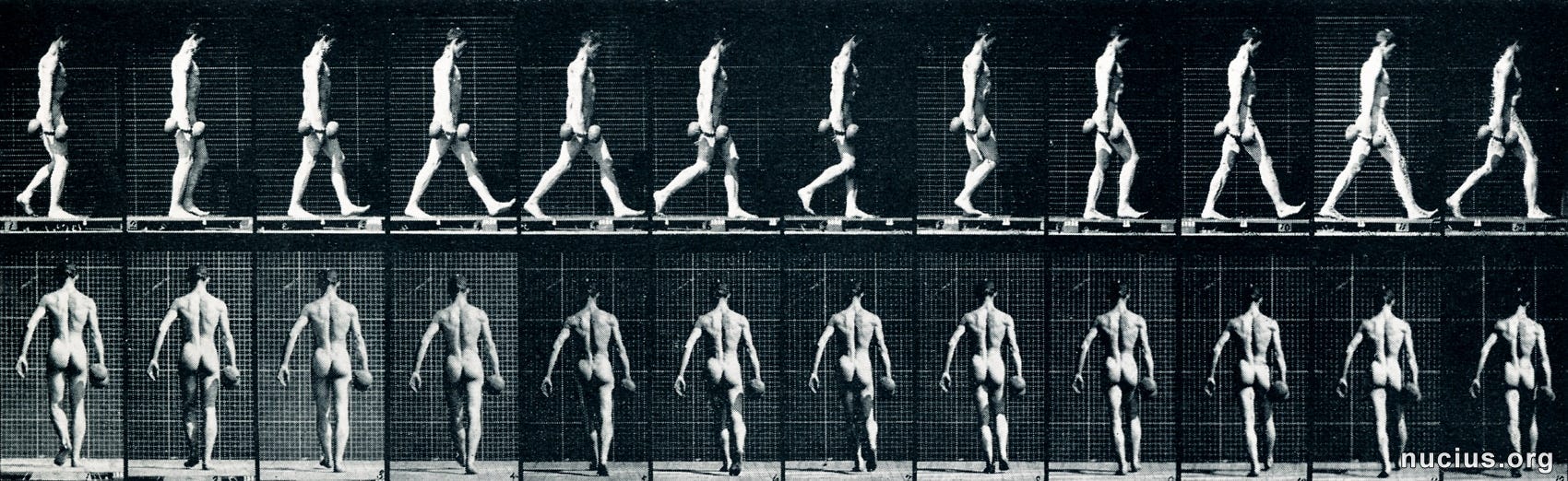
Cinematography was directly advanced in the service of medical and scientific research. After the invention of the Cinématographe in the 1890s, the Lumière laboratory in Lyon turned its attention to tools for scientific enquiry.
Lumiere laboratory designed and produced specialized cameras and film stock for the laboratories of scientists and physicians—researchers for whom the Cinematographe was no less an instrument of physiological research than the microscope or the kymograph (a rotating drum-shaped apparatus used to inscribe movement in a wavelike linear trace)
Screening The Body: Tracing Medicine’s Visual Culture. Lisa Cartwright
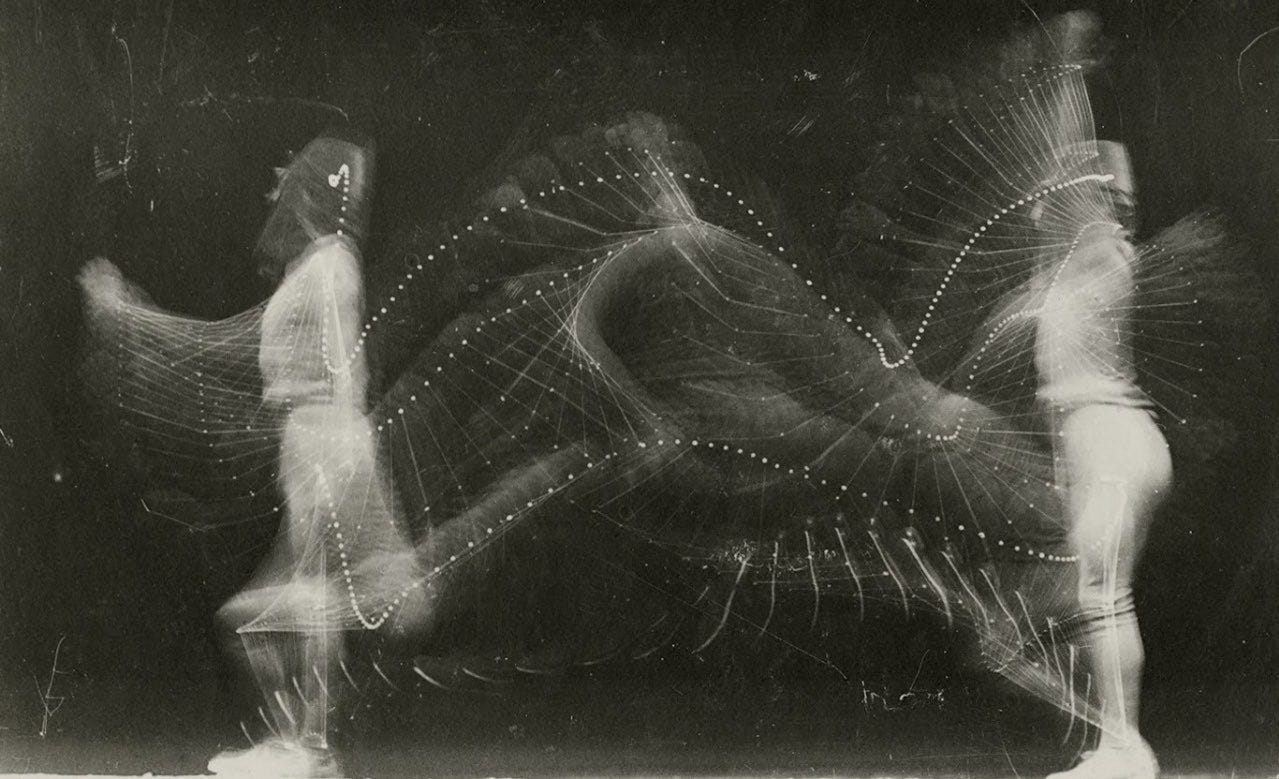
Whether Lumière was motivated by the commercial potential of the science market or by a genuine philosophical alignment with material realism, the link between cinematography and science was direct: it allowed the documentation of the body in motion. To advance cinematography was to advance the possibilities for capturing life on earth. These properties slowly shift as cinema enters public space. Through the screening room, moving image migrates from science into popular culture, and with that migration comes the possibility of shaping consensus.
The birth of the internet accelerated the impact of video on consciousness. We began to morph into the screen. Streaming platforms, tools that claimed to democratise the video creator, all of it worked to flatten the moving image and, with it, the mind. But when you look at the history of cinema, the mind and the moving image were always entangled. Cameras were invented partly as a workaround for drawing. They offered a visual eye to those who lacked one. Henry Fox Talbot, who developed the Daguerreotype process, called his earlier prototypes photogenic drawing processes and openly admitted his failures as a sketch artist. In this sense, the camera was always designed, in some way, to replace the eye.
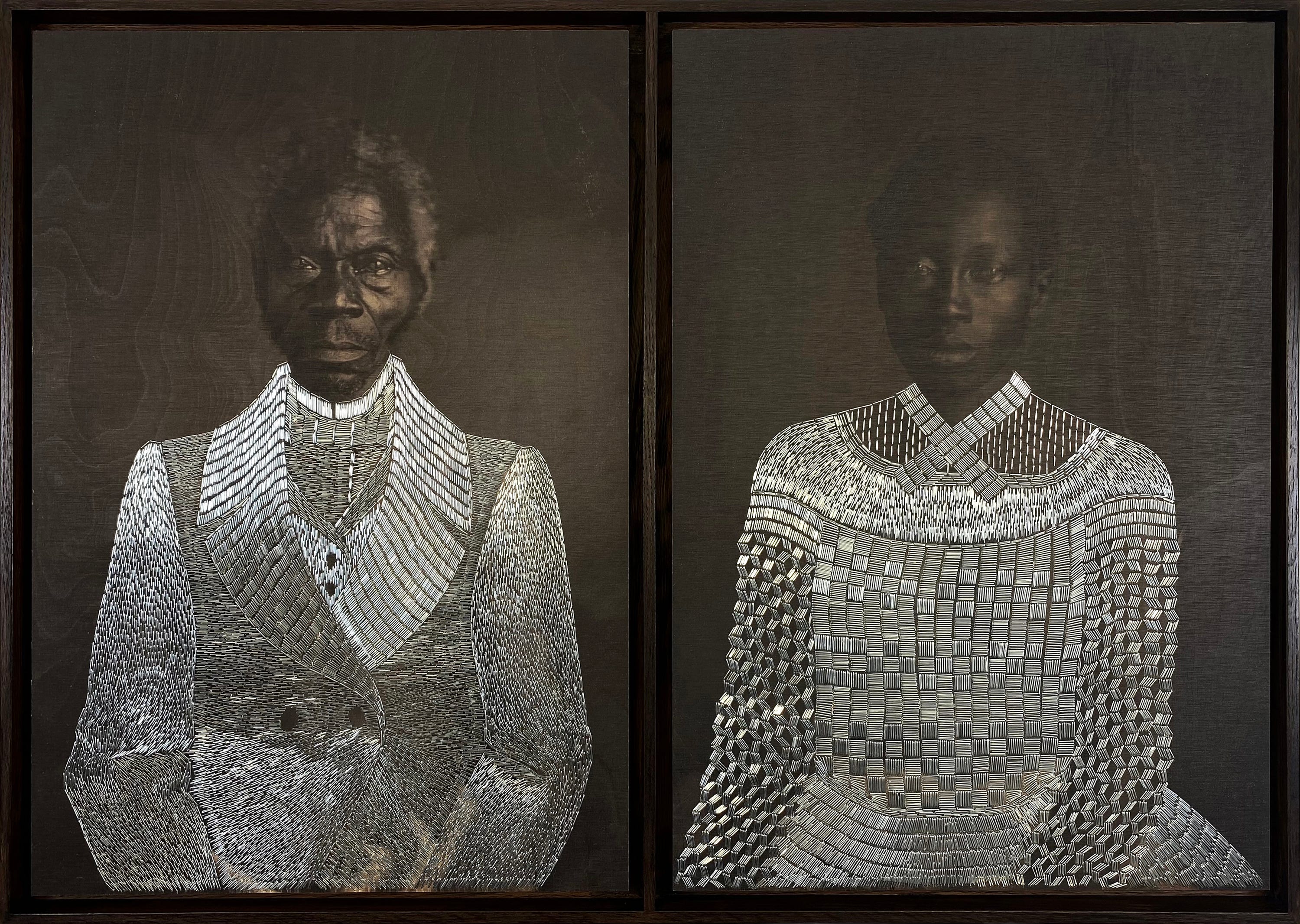
This extends into anthropology as the ethnographic camera starts to form. Ethnography is the study of the cultural and ethnic properties of a group of people. It’s a form of studying humans, and one that was greatly advanced through the use of moving images. I like to think of it as visual anthropology. Emerging in the 19th century, this was also a time when the colonial man ran riot around the world. Films like Nanook of the North show us the output of this era, where films poisoned by the biases of their makers screened with falsity around their representations of truth, only revealing an exotic performance to the Western gaze.
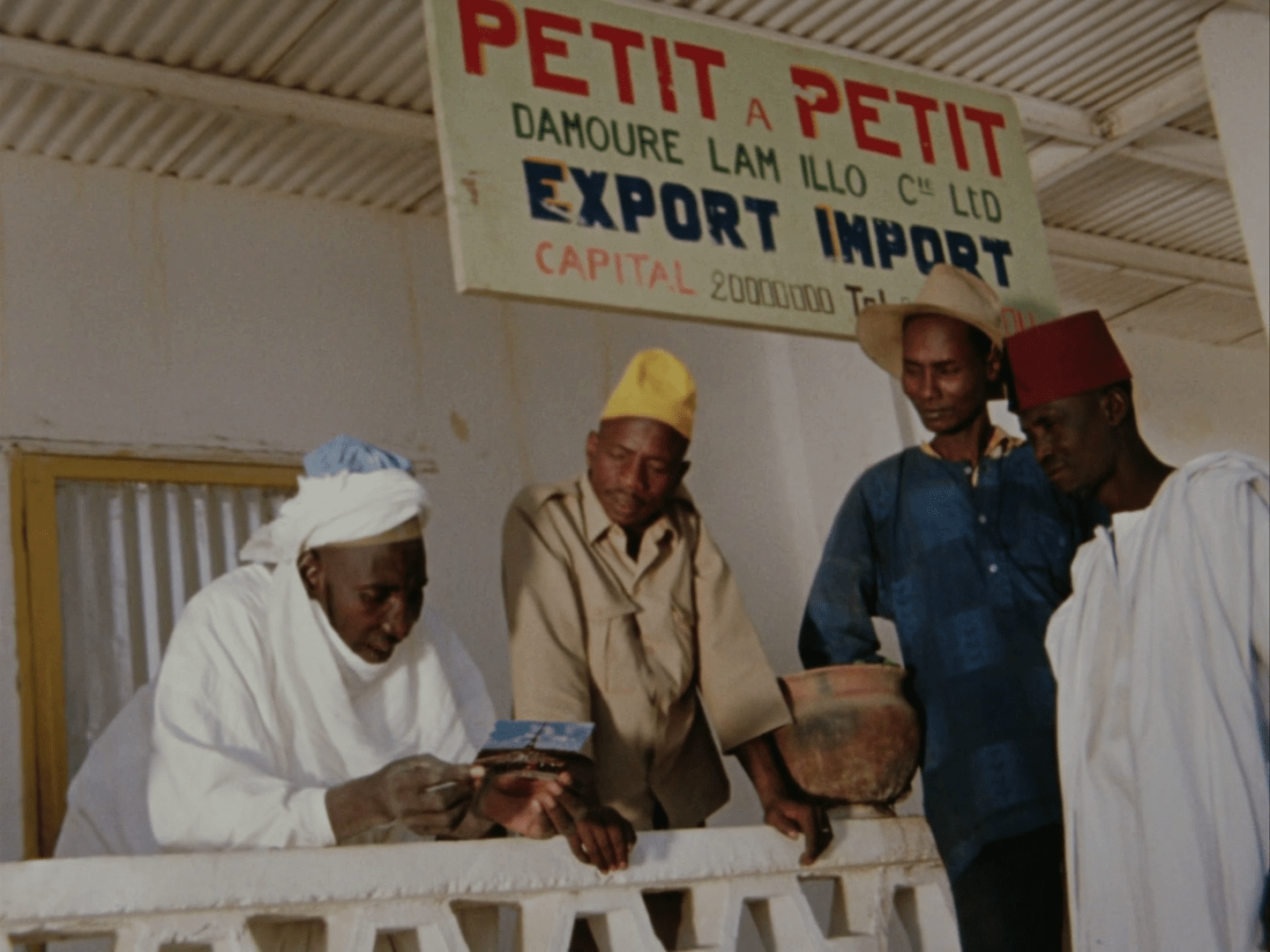
That performance finds its most devastating parallel in the life of Sarah Baartman - the bodacious South African dressed in flesh-coloured tights, forced to tour Europe to perform in the circus. I think the short-lived acting career of Safi Faye, particularly in Jean Rouch’s Petit à Petit is apt here; her life shows her defiance to the final image, which highlights her rejection of the representation of identity on camera.
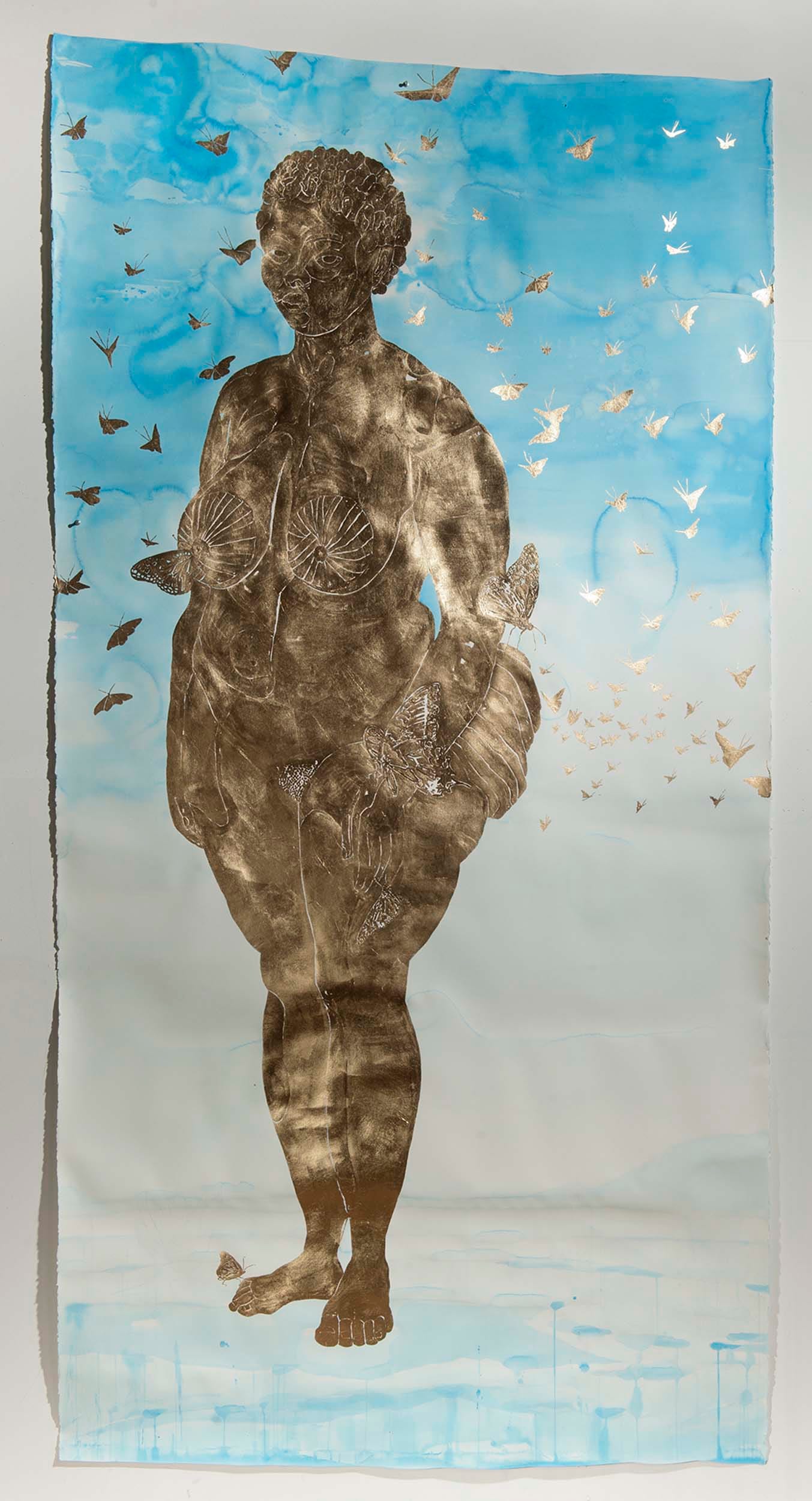
What I am trying to say is that the camera, designed to replace the eye, in the hands of the ethnographer, became an extension of the colonial gaze. It therefore aligned with the zeitgeist of the time with regard to the identity of non-Western people. Stuart Hall led cultural studies on representation, and his work highlights how identity is not an essence but a positioning, one that must be continually re-articulated across history, representation, and fantasy.
“We have been trying, in a series of metaphors, to put in play a different sense of our relationship to the past, and thus a different way of thinking about cultural identity, which might constitute new points of recognition in the discourses of the emerging Caribbean cinema and black British cinema. We have been trying to theorise identity as constituted, not outside but within representation; and hence of cinema, not as a second-order mirror held up to reflect what already exists, but as that form of representation which is able to constitute us as new kinds of subjects, and thereby to enable us to discover places from which to speak. Communities, Benedict Anderson argues in Imagined Communities, are to be distinguished not by their falsity/genuineness, but by the style in which they are imagined (1982, 15). This is the vocation of modern black cinema: by allowing us to see and recognize the different parts and histories of ourselves, to construct those points of identification, those positionalities we call in retrospect our “cultural identities.”
Stuart Hall. Cultural Identity and Diaspora. p.267
Like Stuart Hall, Safi Faye understood that the camera does not document reality, but reality is repositioned through the lens. The instability of identity can be managed by creating films that engage with stories of the past and questions for the future. Re-presentation can involve an engagement with the technical to achieve a satisfactory alignment. I think of the Shirley case at Kodak, where early celluloid processing was unable to photographically represent black skin as its standardised skin tone was referenced off a model called Shirley something. In this case, any attempts to use the camera to re-present black skin were arguably doomed, unless shooting in monochrome. So it’s good to know some technical, as long as it supports your goal. Safi Faye went on to train as an ethnographer, as she wanted to acquire the technical language of the visual anthropologist so she could take control of her own representation. Her philosophy shines through in Mossane, which depicts a woman contained by society’s perception of her beauty; trapped between two worlds, the human and the spiritual. The very existence of this film is an act of rebellion.
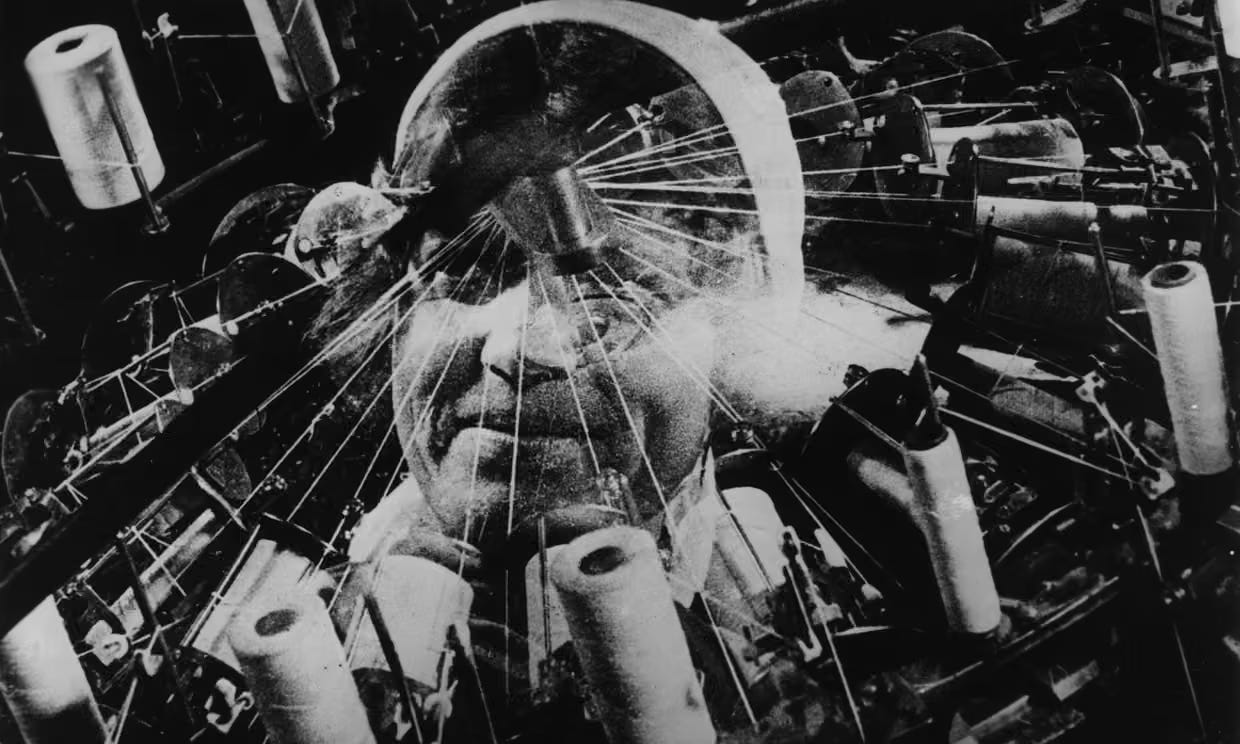
The role of the camera continued to serve communities during the world wars. Ex-colonies were able to sharpen their tools because of scholarships from Russia, which played a massive role in disseminating art education to challenge the Western powers. This sets the landscape for a way of seeing that engages with the reality of capitalism. Where concepts of audience participation become of greater importance. Think the voice over there to guide the audience down a linear route in comparison to slow cinema, where the viewer’s eye, and subsequent mind, are encouraged to wander and think. This approach can be seen in the 1928 russian film by Dziga Vertov, Man with a Movie Camera, a silent film that coined the idea of the kino-eye, which is a way of seeing with the camera, where Vertov believed in capturing things that were “inaccessible to the human eye. He saw the camera as not optimum in recreating what the human eye saw, but through editing fragments, he could create montages that could activate a new type of perception.
Georg Simmel’s observation about the money economy is useful here because it explains something about how cinema gets made. Under a money economy, the conditions that produce a thing become invisible; what you see is the finished object as opposed to the labour, the relationships, or the decisions that brought it into being. Hollywood is perhaps the clearest example of this. The blockbuster arrives polished and total, its apparatus hidden. You’re there to consume it, popcorn and all.
The unconscious of objects that can be revealed optically is precisely the relations of production that ordinarily are represent or invisible… because the acted cinema mystified the relations of production
Jonathen Beller. The Cinematic Mode of Production. p.43
Acted cinema (narrative) made within this system actively mystifies the relations of production. It performs their absence and fights against the Hollywood approach. The camera, which Vertov believed could reveal what the human eye could not, is turned instead toward concealment. This is the tension at the heart of commercial filmmaking: a tool capable of exposing the world is used, more often than not, to smooth it over. I often dwell on these thoughts when I consider my place in the commercial world.
The response to this, historically and practically, has been to step outside those structures entirely. Independent filmmaking is a different relationship to those means of production. When you control the camera, the edit, the distribution, and the story, you are making decisions that a studio system would make for you, and usually in someone else’s interest. This is what draws many filmmakers, like myself, to work outside the industry: poverty autonomy.
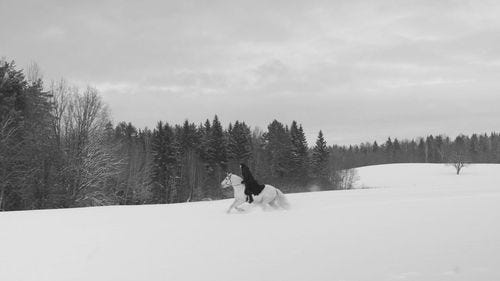
For a small team, or a team of one, self-organisation is less a philosophy than a daily practice. It means knowing your equipment well enough to move fast. It means building a workflow that doesn’t depend on infrastructure you don’t have. It means making the constraints generative rather than limiting. The filmmakers I admire most tend to work this way. I think of Mother Vera, a film that was shot by a two-woman team with a small camera rig.
But Self-organisation, taken too far, becomes isolation. The other thread running through independent filmmaking, and through the broader history of cinema outside Hollywood, is mutual aid: the idea that filmmakers share resources, knowledge, and access, as a catalyst for collective survival.
This shows up in practical ways. Equipment shared between collaborators. Skills exchanged. A network of people who show up for each other’s shoots because they know the favour will be returned. Think the WhatsApp contact that can get you any rig. Or even that Discord group offering discounted prices on gear. The Russian film schools that disseminated education to ex-colonial filmmakers were operating on a version of this logic, the redistribution of technical knowledge as a political act. African filmmakers were taught in these schools under that logic.
For me, this is where the theoretical and the practical fully meet. The camera as a tool for seeing is only as powerful as the community of people using it with intention. Working alone is sometimes necessary. But the work I am most proud of has always involved other people. Communities that offer presence, trust, and a willingness to be seen. I recall a project, Hostile Housing, where active participants engaged in workshops to produce a film about the social housing crisis. The lead filmmaker brought his own kit: Sony FX5, Sennheiser shotgun microphone, and a film tripod. Participants were all given chances on each piece of equipment as a form of knowledge sharing. That was one of my earliest lessons in film. The final moving image was completed in 2022 and aired at the London Short Film Festival in 2025.
So when I say thinking through cinema, I am talking about replacing your eye to create images that go beyond realism. I am talking about allowing your camera to embody your philosophy. From the subjects you shoot to the collaborations you hold. It’s a way of looking that encourages you to interrogate reality by changing the shutter speeds on life to create the world you envision. Thinking through cinema allows your cinema to become reality.
References
Reading
John Berger. Ways of Seeing.
Gile Deleuze. Cinema 2, The Time Image
Stuart Hall. Cultural Identity and Diaspora.
Jonathen Bellor. The Cinematic Modes of Production
Corrigan. The Essay film from Montaigne to Marker Vertov to Vada
Cinema
Berry Kroeger. Nanook of the North. 1922
Jean Rouch. Petit à petit. 1970
Cécile Embleton, Alys Tomlinson. Mother Vera. 2024
Artworks
Stacy Lynn Waddell. Goldenhot Butterfly. 2022
Muybridge. Athlete walking with a fifty-pound weight in one hand. 1887/1901
Sasha Huber, Tailoring Freedom – Renty and Delia, 2021