

The work of Sarah Maldoror
The first feature film by an African woman.

You can find Sambizanga and Mossane in our quicklinks on our hompage (desktop).
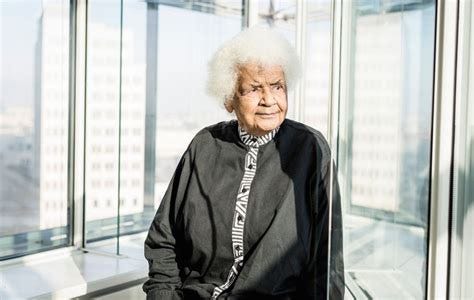
Sarah Maldoror’s Sambizanga (1972) marked a groundbreaking moment in global cinema as the first feature film directed by a Black woman. Set against the backdrop of Angola in 1970, the film follows Maria’s desperate search for her imprisoned husband, unfolding a narrative that interweaves gender, class, and anti-colonial struggle. Through Maria’s journey, Maldoror exposes the complexities of self-determination and the untold perspectives of those silenced under Portuguese colonial rule.
Comparable in its symbolic force is Ousmane Sembène’s Xala (1975), in which an African Socialist’s impotence on his wedding night—caused by the titular curse—becomes an allegory for political corruption and cultural dislocation. Women in the film embody symbols of defiance and continuity. Rama, the protagonist’s daughter, stands out: draped in Wolof cloth beneath a map of Africa and speaking her native tongue, she becomes a figure of cultural resistance. Sembène’s critique does not spare African nationalists, Christianity, or Islam, holding African socialism to the same scrutiny as European colonial ideologies. Unlike Soviet cinema, which was tightly bound to state propaganda, these filmmakers developed a cinematic language untethered from regimes—trained in Moscow yet committed to their own radical critiques.
This refusal to replicate Soviet propaganda underscores the political agency of African filmmakers during this period. Their critiques were unsparing and equal-opportunity: imperialism, socialism, and imported ideologies were all subject to interrogation. Maldoror’s influence proved enduring, paving the way for directors like Safi Faye. In Mossane (1996), Faye challenged the ethnographic gaze long cast upon Africa. Presented as a folkloric legend, the film revolves around Mossane, a young woman whose beauty provokes conflict within her village. By framing beauty as both sacred and sacrificial, Faye turns the male gaze back upon itself, interrogating power and desire through a distinctly female perspective. Like Eisenstein, she wrestles with the idea of freedom, but her lens is grounded in women’s experiences, subverting male-dominated traditions of cinematic thought. Faye’s trajectory—from ethnographer to actress to filmmaker—enabled her to position herself in direct opposition to the Western exoticist gaze, reclaiming African cinema as art in its own right rather than anthropological documentation.
A fearless figure standing among giants, Sarah Maldoror embodied the very determination her characters depicted. In Sambizanga, Maria navigates an unfamiliar city with her child and a young companion, seeking her husband whose fate is sealed by the colonial prison system. The narrative concludes with the revolution moving forward despite personal loss, symbolised by the appointment of a new leader and the persistence of the messenger—an embodiment of struggle continuing beyond the individual.
This legacy of defiance also finds expression in Maldoror’s collaboration with Aimé Césaire on Et les chiens se taisaient (And the Dogs Were Silent, 1976/1978). This short film adapts Césaire’s theatrical work into an existential meditation on rebellion and colonial oppression. Filmed in the Musée de l’Homme in Paris—a site filled with colonial plunder—the dialogue between a rebel and his mother resonates among African sculptures, turning objects of colonial display into silent witnesses of resistance. The film captures extracts from Césaire’s long poem, where a revolutionary contemplates his life and imminent death in the face of collective catastrophe. In bringing this text to screen, Maldoror not only amplified the Négritude movement but also expanded her political cinema into new experimental territory, where literature, performance, and film converge to confront colonial violence.
Together, these works demonstrate Maldoror’s singular commitment to cinema as a vehicle for both personal and collective resistance. Her films, alongside those of Sembène and Faye, created a language of liberation—interrogating structures of power while insisting on African self-determination, imagination, and voice.
Films mentioned
Sambizanga (1972) – Sarah Maldoror
Xala (1975) – Ousmane Sembène
Mossane (1996) – Safi Faye
Et les chiens se taisaient / And the Dogs Were Silent (1976/1978) – Sarah Maldoror