

Imagine a world where barbers became extinct
Le toit du monde

The thought of losing a barbershop brings back memories of third spaces flooded with culture: Jamaicans performing their best Oga impressions while the local bootleg DVD seller steps in for a fresh cut. Losing that kind of space summons a particular fear of losing the roof under which a culture gathers, repairs itself, and stays legible to itself. That fear is the emotional key to Kidlat Tahimik's Bubong! Roofs of the World! Unite! (2006), a film that takes something as mundane as a leaking roof and turns it into a manifesto for what survives when nations cannot be relied upon to provide shelter.

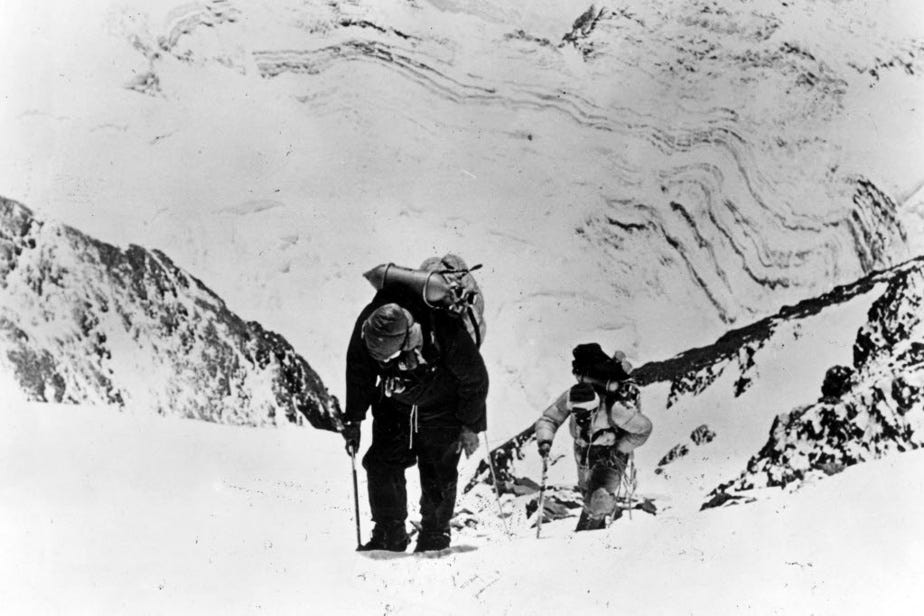
Billed as a 20-minute experimental documentary "about roof-building," the film is really a call to arms, and the word "experimental" does a great deal of unspoken work here: it's the alibi under which Tahimik can refuse the conventions of the ethnographic travel film even while travelling, refuse argument even while arguing. We open with brown boots struggling up a rocky highland, corrugated metal sheets clanging against each other in a cacophony that slowly resolves into language:
Today’s the day we hang the Tibetan flag!
The roof, before it shelters anyone, announces itself, sound before image, labour before meaning. This is Tahimik’s method throughout: material first, ideology second, so that the political claim arrives already weighted with the texture of the hands that built it.


Three locations structure the film’s geography, and none of them are incidental. Tahimik begins with his own leaking roof on Guimaras Island in the Philippines, a domestic, almost embarrassing problem, before travelling to the Tibetan Himalayas, where bamboo temples sit in permanent renovation, and finally to Bodh Gaya in India, the site of the Buddha’s enlightenment. The film’s logic is not comparative in the sense of “look how other cultures build roofs too.” Instead we get something that is genealogical: by proposing that the leaking roof of a Filipino artist’s house and the perpetually-repaired roof of a Himalayan monastery belong to the same lineage of maintained architecture, structures that persist because someone keeps returning to fix them. Permanence, in Tahimik’s vocabulary, is suspicious; it belongs to the colonial and the monumental. Repair belongs to the people who actually live under the roof.
This is where the Tibetan setting shows its significance. Tibetan Buddhist monastic culture has been rooted in the high-altitude reaches of the Himalayan plateau for centuries, in a landscape where monasteries are themselves the product of constant, unglamorous upkeep against weather and altitude. By placing this alongside his own roof in the Philippines, another nation shaped by the long aftermath of colonial rule, where "third world" infrastructure is itself a kind of perpetual repair job, Tahimik builds an implicit solidarity between Tibet and the Philippines that has nothing to do with shared religion or geography and everything to do with a shared relationship to precarity. Both places, in his framing, are "roofs of the world" because they are exposed: to weather, to neglect, to larger powers who do not have to live under what they govern.
The recurring slogans:
Roofers of the world unite! le toit du monde!
“The only thing you stand to lose are your leaks!”, are where this solidarity becomes most pointed, and most knowingly absurd. The structure is a direct citation of revolutionary internationalism, the Communist Manifesto‘s famous call refitted for an audience of literal roofers.
Tahimik’s slogan-citation works the other way: it takes a grandiose revolutionary register and applies it, sincerely, to something as unglamorous as fixing a leak. The joke is that the slogan was never too big for this. Roofs, repair, shelter: these are the stakes of internationalism, just stripped of the nation-state’s mediation. Solidarity here is horizontal, roofer to roofer, village to monastery, rather than routed through any government’s idea of international relations.
His own body and voice are central to this. He moves between voiceover and on-screen participant, never settling into the detached authority of the documentary narrator. His presence insists that this is not an account of other people’s roofs observed from outside, but a shared problem he is implicated in, his leak is part of the same weather system as the monastery’s. Where Landrián’s opacity withholds the body from the state’s gaze, Tahimik does something like the inverse: he over-supplies his own presence, refusing the documentary convention that would let him disappear behind the “objective” footage of Tibet and India. The personal and the global are not separable registers here; the leaking roof in Guimaras is offered as evidence for the condition of the Himalayan temples.
By the time the film arrives at Bodh Gaya, the place where shelter from the elements and spiritual awakening become, in Buddhist tradition, the same event, the argument has fully assembled itself. “Roofs of the world” is a serious claim: that the conditions of exposure, repair, and improvised solidarity experienced by people without reliable state protection constitute their own kind of internationalism, one built on the shared, endless labour of keeping the rain out. Returning, finally, to that barbershop: what was at stake there was never really the haircuts. It was the roof, the third space itself, maintained by hands that didn’t own the building but kept it standing anyway. Tahimik’s film insists that this kind of maintenance is the politics.