


From across the Atlantic, we can hear the cries of the stolen, captured, and lost. In the centre of Greenwich Museum’s Ocean Court space stands a global map. Blue lights circumvent its flat-sphere marking the ground, one lumen at a time. Mood plays an important role in EVEWRIGHT’s work. By engaging with the history of the Zong massacre, we find that it all becomes about mood. How to prepare: the viewer, the museum, and the world?
What is the story of Zong?
The Zong Massacre is an erased and under discussed part of history. Never truly acknowledged, never truly memorialised. It was the name given to a slave ship. At its peak, the slave trade was the most profitable mode of business. The industry was so sophisticated that ships built with the sole goal of transporting enslaved people across the Atlantic were also insured as acceptable cargo by maritime companies. It is this insurance that both leads to and reveals the tragic incident.
In the last weeks of 1781, the crew of the Zong, a Liverpool-registered slave ship, had thrown 132 Africans overboard to their death. The ship was en route from Africa to Black River in Jamaica, had overshot its destination and was running short of water….The atrocity might have passed virtually unnoticed but for one extraordinary fact: the syndicate of Liverpool businessmen who owned the Zong took their insurers to court to secure payment for the loss of the dead Africans.
James Walvin. 2011, The Zong: A Massacre. p. 1.
This raised legal disputes as British critics were captivated by the polarising nature of the incident. It became highly visible, highly political, and ultimately led to the abolition of slavery. But the lives lost were never truly accounted for. Maritime deaths are an official process, names are marked according to a list, recorded and documented for the future. The Zong had no such thing. Today, visual representation of the ship takes on the form of a painting.
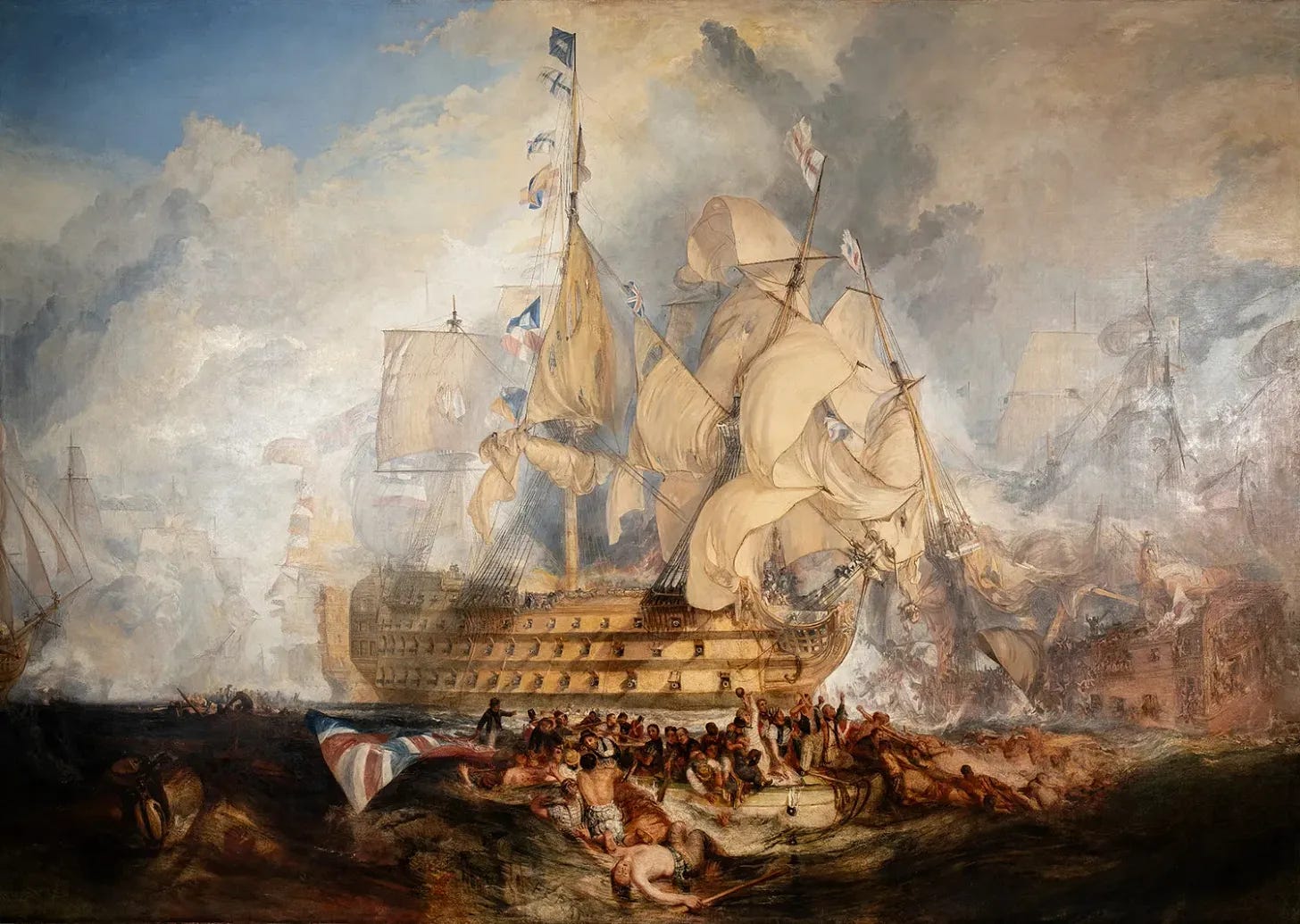
This is the only great work of Western art ever made to commemorate the Atlantic slave trade. It conveys a sailing ship in the distance about to be engulfed by a typhoon. In the foreground, black people are drowning in the turbulent ocean. In the middle of the frame, the sunset parts the dark ocean. Turner was aware of incidents like Zong, but also:
That the Atlantic slave trade continued despite the Anglo-American abolitions of 1807 and 1808, and that enslaved Africans remained victim to periodic acts of atrocity on those later clandestine foreign (Spanish and Portuguese) vessels)
Ibid. p. 5
In this way, the painting functioned as a memorial to those that were lost at sea for economic gain.
What was the exhibition Unbroken?
I was lucky enough to visit Unbroken, 2025. during the studio’s residency at National Maritime Museum. The residency is built around an artist’s exploration of the museum archives. If London is a capital of a maritime matrix, then Greenwich is the key player. As a museum, this is evident in the collection which explores varies eras of shipbuilding, dockyard life, and the world wars. For the residency, the artists focused on documents relating to the massacre.
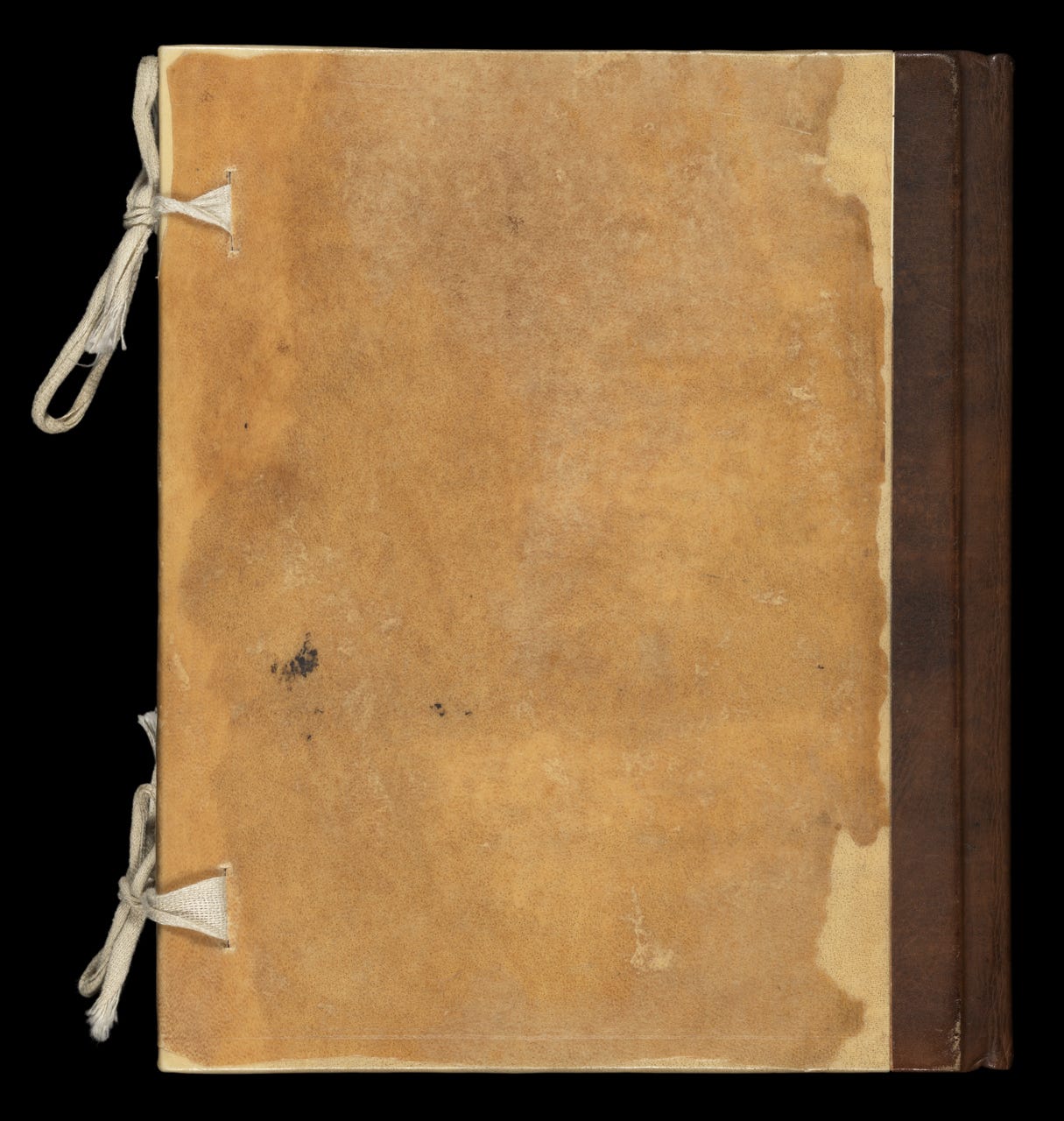
I have discussed the idea of challenging documentation about the past. I look at thinkers like Kafka to showcase the role of power in systems of knowledge, showcasing this philosophy in my film Archives Also Die, 2025. In this case, the craftsperson chooses to challenge the knowledge accessed through documentation by making something in response, or as a way to research. This is similar to Keith Piper's work. I too have experienced this and feel that the best way to sum it up is that history can be boring, tragic, and every other emotion humanly possible. Engagement with that history involves finding ways to sit with the knowledge. I have found that making, given its material connection to time: the use of our hands, the cleaning up of an area, the thinking process behind planning an idea. All of this tricks your mind into sitting with the knowledge. I find sometimes that when I read words, I am able to recognise the signifier to create a thought, but am unable to maintain prolonged engagement with the knowledge gained from that thought. The history of Zong is a trauma that lives on because it was never really put to rest. Unbroken was an artist’s prolonged engagement with this trauma.
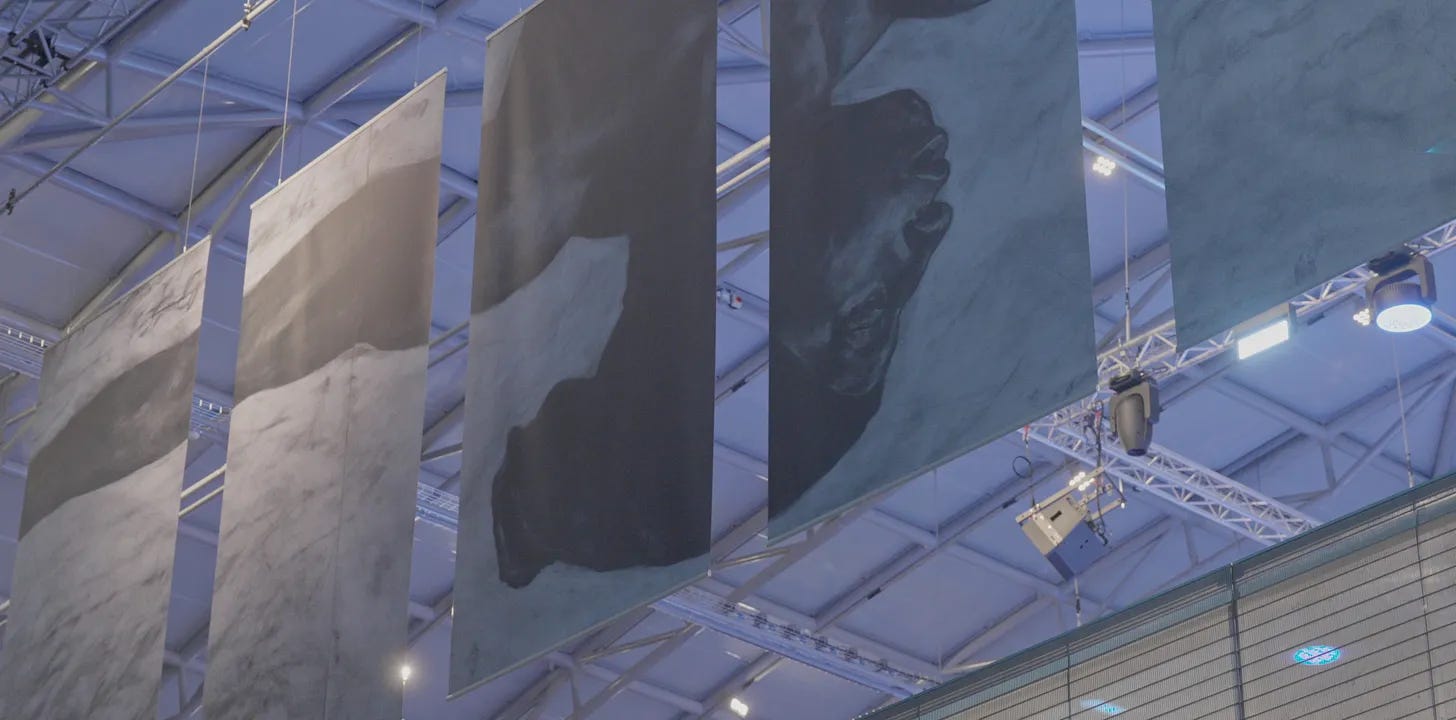
The exhibition featured poetry from Ionie Richards, of EVEWRIGHT, and plaster based sculptures from Everton that reimagined the £££KISSIPENNY$$$, a currency used to trade enslaved africans. Both mediums visually represented as banners that hung above the Ocean court showing the art objects on the interior, and life size charcoal drawings on the exterior, only viewable from the ground floor. During this residency, various events were workshops were held that explored deeper concepts of the black body, water, and movement. Things like life drawing, and performance art were re-presented as motifs to draw the viewer deeper into the exhibition. The movement of charcoal to document the black body as it glided across the map print on the museum floor sets the stage for engagement with this history. Accompanied by sounds of the crashing waves encasing participants, the addition of a poetic rhythm guided sketchers along the readings from Ionie. I don’t know if this experience can ever be repeated.


My serendipity continued in attending EVEWRIGHT’s studio. There Everton suggested a parallel, now front of mind. Holding a beaten book of photo reference, clutched firm in charcoal-coated hands, he asked: what do you see? The pages showed maritime officers in their formal dress. Peaked caps. Double-breasted coats. Epaulettes marking rank. The uniform of someone whose authority over bodies at sea was total and legally sanctioned. Then he said: it's ICE. And the connection landed not as metaphor but as fact. The tactical vest, the cap, the insignia of rank, the visual language of someone whose authority over bodies in motion is total and legally sanctioned. Centuries apart, the grammar is the same.
What are the parallels with ICE?
The contemporary ICE practice turns the movement and confinement of racialised people into a site of profit where law treats them as expendable, not fully human, in ways that normalise preventable death. This was the sole goal of Zong.
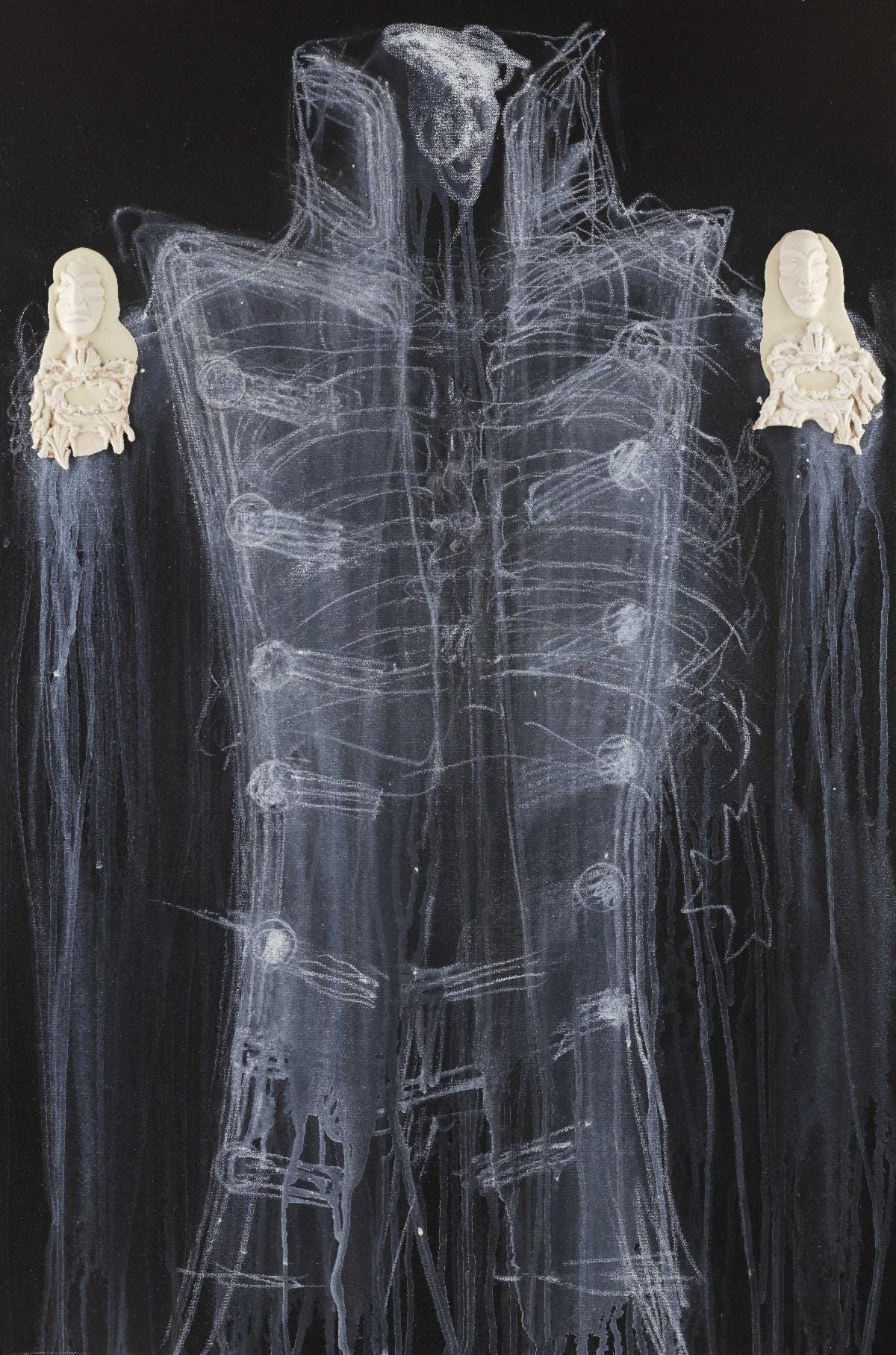
The uniform materialises power. The ship’s captain held absolute legal authority over who lived and died at sea. The uniform materialised this power, distinguishing those who commanded from those who were cargo. On the Zong, Captain Luke Collingwood’s decision to massacre the enslaved people was made from within that structure of command. The uniform was the visible grammar of that hierarchy. The ICE agent uniform also works as a marker of militarisation. The visual shift in immigration enforcement towards tactical, military-style dress is documented and deliberate. Tanya Golash-Boza’s work on immigration enforcement, and reports from the American Immigration Council, touch on how this aestheticises state power. Even in the case of the detainee where ”at Berks County Prison (BCP) in Leesport, Pennsylvania, detainees are given only one uniform and must sit around in their undergarments for two to six hours when they send their uniform in for washing.” Golash-Boza, T.M. (2012). p. 40
People become cargo. In the US, racialised groups of people in its custody are formally recognised as persons, but processed as detachable “units” within what scholars call an “immigrant‑industrial complex”, where detention beds are quotas to be filled and bodies are revenue streams for private prison contractors. The immigrant industrial complex is the infrastructure that makes this profitable.
The movement of cargo makes profit. Immigration detention is similarly tied to profit, though in a different legal form: private prison companies and local jails are paid per detainee per day, creating financial incentives to expand and prolong detention as a form of incarceration business.
Laws are made to reinforce the systems continuity. Today, immigration law constructs migrants as deportable and detainable in ways that routinely override broader human rights norms. After a 2025 Supreme Court ruling, ICE agents have even been empowered to use race as a basis for immigration stops, and some Black lawmakers have explicitly compared these practices to “modern‑day slave patrols,” highlighting how law sanctions racialised policing of movement. Reports by the UN and human rights groups point to arbitrary detention, family separation, and dehumanising treatment as systemic, not accidental, signalling a legal framework that creates categories of people who can be deprived of liberty with fewer safeguards.
The designs of containers advance to hold more cargo. In ICE custody, people describe being kept in freezing, overcrowded rooms with constant fluorescent light, sleeping on concrete floors, with limited access to toilets, hygiene, or medical care. These conditions contribute to what some scholars call “slow death”: in 2025 alone, 32 people died in ICE custody, the agency’s deadliest year in two decades, and deaths have continued at an alarming pace, prompting concern from the UN High Commissioner for Human Rights.
A key difference is that the Zong massacre was a single, spectacular act of mass killing in a context where open, direct violence was routine and legally protected, whereas ICE’s violence is more often bureaucratic and dispersed over time, through denial of health care, indefinite detention, or deportation into danger, though there are also individual killings and cases of overt brutality. Still, many abolitionist and migrant justice organisers deliberately invoke the Zong and the slave ship more broadly to argue that any system that cages racialised people for profit and treats their deaths as collateral is part of the same historical continuum, even if the legal categories have changed.
How can we engage with power through material exploration?
EVEWRIGHT gives us the response to systems that erase by making something that refuses erasure.
Plaster: malleable enough to be shaped, yet hardening to a strength sufficient for lasting form.
Accessibility was the reason behind this choice, and accessibility should remain front of mind for any sculptor thinking seriously about their practice. With ideas of access come ideas of longevity, of how to manage what flows in and out of the studio. Applications to residencies and commissions become opportunities not just for creative development, but for restocking materials. The act of managing supply quietly shapes how regularly a material can be explored. It demands a long-term commitment: which materials are worth building a practice around?
This is a challenge the artist knows intimately. The workshop: the conventional infrastructure of sculpture is not always accessible. Plaster solved this problem.
Typically a building material used for coating walls and ceilings, or casting decorative elements, plaster becomes something else in the hands of a sculptor. The process works like this: a design is first modelled in clay, then encased in silicone to create a negative, a mould. That mould can then be filled with plaster to produce a precise, one-to-one recreation of the original form. The clay thinking, now made permanent.
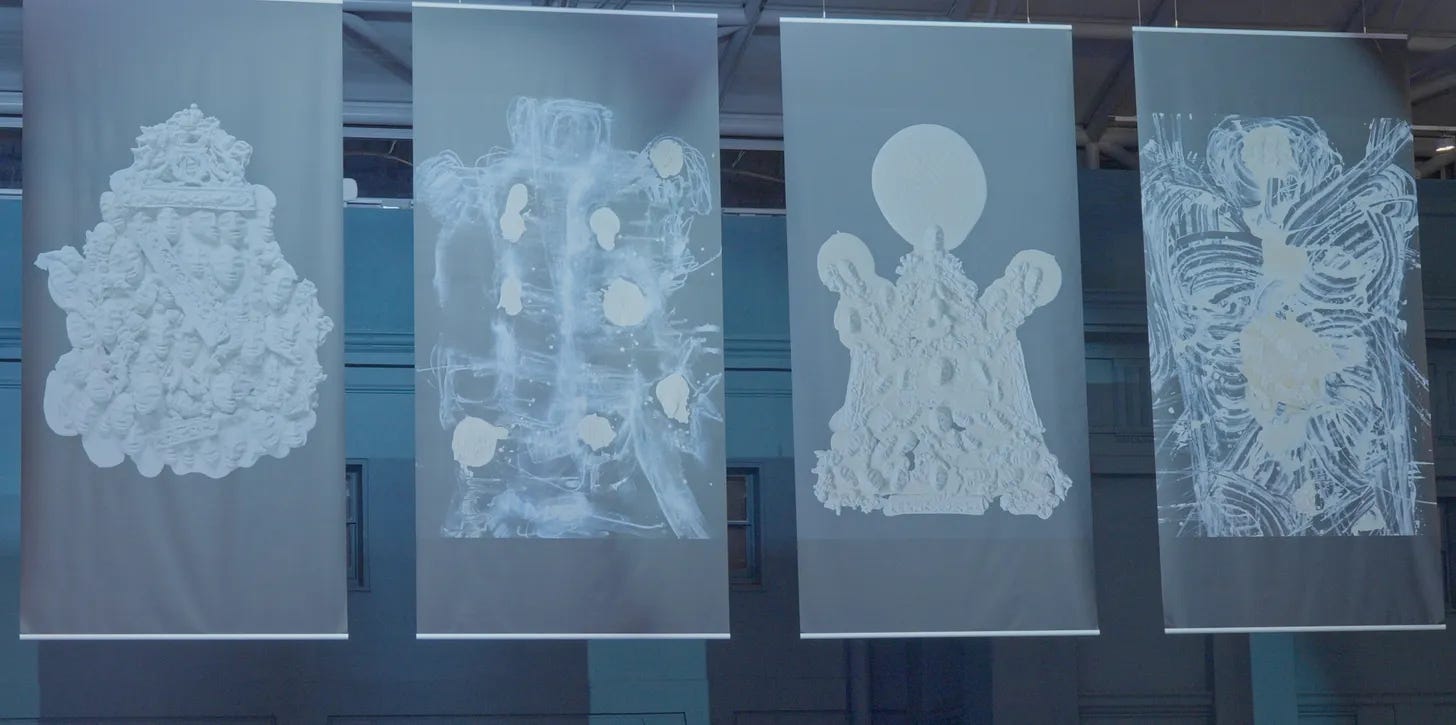
Why plaster? Largely composed of gypsum, lime, and cement, it offers a set of properties that are quietly radical for an independent practice. It is cheap. It moves through states, from fluid to firm to solid, with a responsiveness that rewards experimentation. Once set, it is durable enough to handle and light enough to transport. It is a material that meets you where you are, rather than asking you to build an entire infrastructure around it.
Sources
EVEWRIGHT Studio
https://evewright.com/
James Walvin. 2011, The Zong: A Massacre, the Law and the End of Slavery. c. Painting Slave Ship. p. 1 https://archive.org/details/zongmassacrelawe0000walv/page/n3/mode/2up
Golash-Boza, T.M. (2012). Immigration Nation: Raids, Detentions, and Deportations in Post-9/11 America (1st ed.). Routledge. https://doi-org.libproxy.ucl.ac.uk/10.4324/9781315634036. p. 40
Documents relating a case in the Court of King’s Bench involving the ship ZONG.
https://www.rmg.co.uk/collections/objects/rmgc-object-500960


