

Funding your MFA is not about merit
What institutions won't tell you about postgraduate funding

Funding my MFA has meant being able to produce work without fear of financial survival. I have struggled to talk about this because I have felt disconcerted towards my privilege in being eligible for funding. But after sharing a recent post on TikTok about some wins where I highlighted in brief my scholarship at UCL, I have been inundated by the wave of interest in the topic.
This process supports any creative practice, and at times can involve steadily waiting for the right opportunity. Before the MFA, I was accepted into a Data Science Master’s - this too was funded, but I swerved the decision at the last second. So funding can relate to any course. It really is a game of identifying the programme you want and finding a way to make it work. But there are some key shifts in politics that are worth considering, which can make your research a little varied.
Historically, funding has been about philanthropy, where the really wealthy support pots to fund a particularly gifted student’s entry into a programme. This concept is heavily tied to meritocracy and has gaps in its attempts to tackle inequality. Though useful to many, it creates more competition than opportunities.
Funding is a way to build equity in education. Whether you agree with the mantra that everyone has the same 24 hours in a day or not, funding at its core recognises the need to widen participation in education activities. That being said, institutions are designed to make money. Because of this, they have a corporate responsibility as well as a social responsibility. Understanding this will help you understand how to search for funding. As it can often involve understanding your socioeconomic position in relation to a set of available opportunities, if a university is to fund you, what are you allowing them to fulfil in their institutional responsibility - whether corporate or social? This phrase corporate social responsibility is a deliberate one with a distinct meaning. It refers to the business model of companies to operate in ways that enhance society and the environment. Universities have these statements1 on their websites, too. Granted, as an educational institution, they can use the term Civic and Social Responsibility. Learning about the responsibility that your ideal university has will help you understand how best to fund your programme, as each year the particular focus of that responsibility may shift slightly.
The influence of globalization, especially the period starting from the twenty-first century, explicitly showed that universities have begun to implement tasks that could be considered as nontraditional when compared with the nature of these institutions. These tasks were Corporate Social Responsibility – A Global Perspective usually inspired by the spirit of university social responsibility aiming to alleviate societal well-being and facilitate industrial development.
Corporate social responsibility : a global perspective / edited by Muddassar Sarfraz and Kashif Iqbal.2
In this perspective, if a University has a high intake of foreign students, it is its civic and social responsibility to widen the participation of home students by analysing the admission data to help develop solutions that produce a more balanced output. This might look like creating a new course. If a university launches a new campus in a new part of the city, they have a civic and social responsibility to support the participation of locals from that area in the admission and general engagement with its activities. You can see the pattern. Sometimes, finding a way to fund a programme can involve understanding how a university has been developing its business model. Some universities rely on foreign students, while others accelerate expansion by building on profitable land. I am interested in learning more about other models.
It is also important to understand the role of the government in all of this. Though institutions function as independent bodies, there is a direct relationship between education and fiscal prosperity. A more skilled workforce is a more specialised one, and governments know this. It means that when the economy is under pressure, funding is directed toward the skills and disciplines the government sees as strategically important for economic growth.
During COVID, for instance, research revealed that scientists reviewing data were transferring their own biases into their results. This pointed to a broader need: science had to be grounded in social and anthropological thinking, so that researchers could interrogate their assumptions more critically. In response, government funding began supporting programmes that trained social science students in more technical methods, bridging disciplines that had previously been kept apart. This is how I was planning to fund the Data Science course.
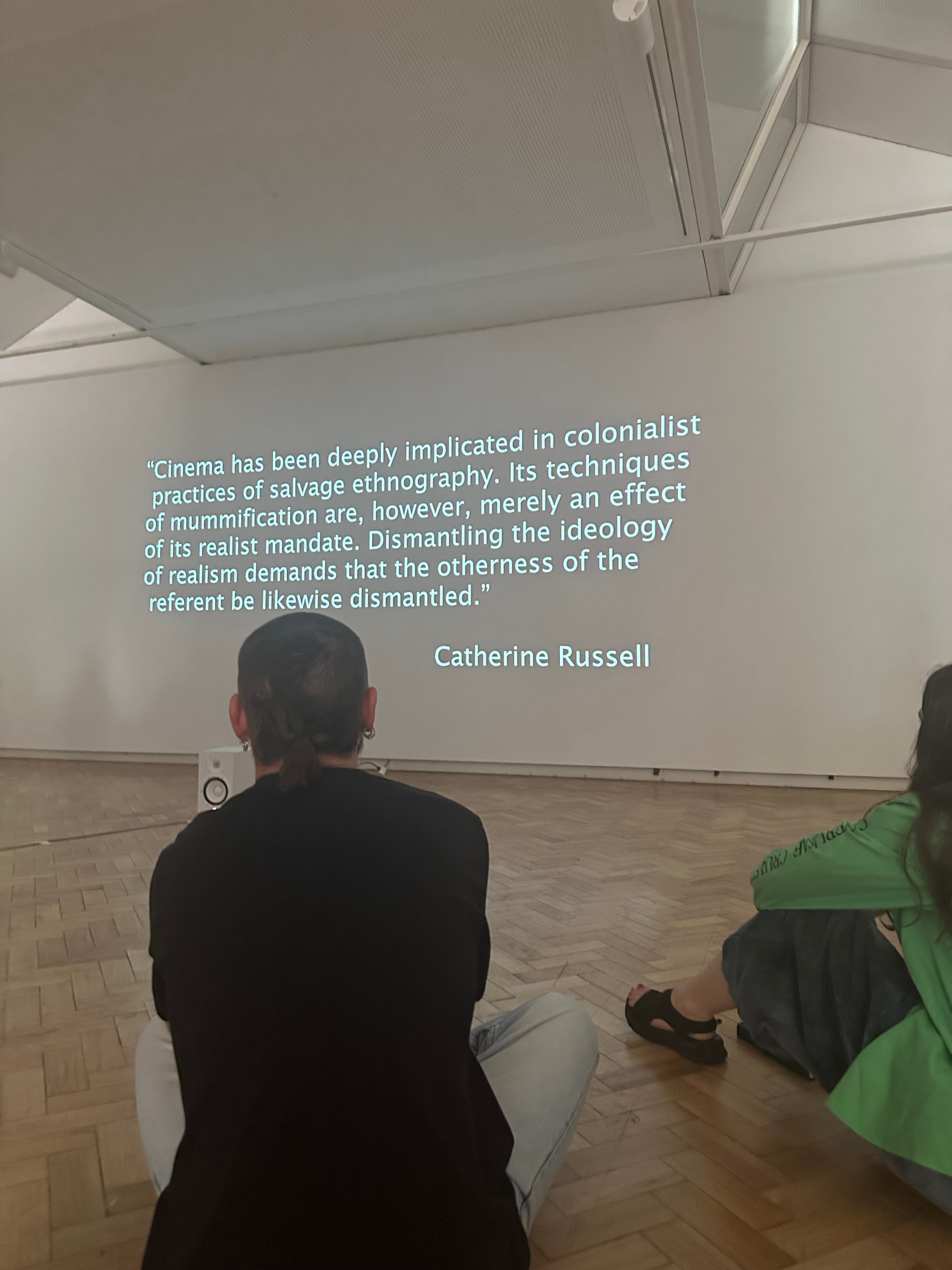
That shift also changed how arts and social sciences were valued more broadly. The pandemic had demonstrated, in real time, that ethnographic and qualitative knowledge mattered, that understanding human behaviour and context was not a soft add-on to hard data, but essential to it. In response, universities including Oxford, Goldsmiths3 and UCL began offering programmes by practice for the first time, where students could be assessed on creative output rather than just essays or technical tests. This was significant. It created a genuine bridge for social science and art students to develop more freely within academic institutions.
I think the above sets a useful foundation. Because, as you search for funding, the first question to ask yourself is: what social responsibility does an application like mine fulfil? You might be a female student, a home (national) student, or a student from a specific local area. UCL, for example, offers scholarships to individuals based in East London as part of a widening participation scheme tied to their expansion into the east. Eligibility might involve attending a primary or secondary school in the area, or living there for five years or more. I also recently saw a PhD fund4 at King’s College designed entirely to build bridges across the African diaspora, favouring applicants from African backgrounds and asking only for evidence of interest in an idea. And there are more unexpected routes too, a religious arts fund, for instance, that supports painters in exchange for producing work in a traditional devotional style. This is how Michelangelo funded his studies.
There are multiple ways this narrative can play out, and I do not think it serves anyone to approach funding as a one-size-fits-all process. My successes have come from making my goal fit the funding criteria, not the other way around.

In my programme, I knew that I wanted to develop my creative practice. I had skills in filmmaking, but was unsure whether a dedicated filmmaking course could support my needs. All I knew was that I wanted to continue creating in an interdisciplinary way. I decided to apply to a film course within an anthropology department, at a strong university, where the fine print reads by practice. This meant I would be granted creative freedom to submit works pushing the boundaries of cinema, and that ultimately, I could bring any element into film, even if this wasn’t written explicitly in the course description. A course defined by practice5 means that your creative output is your evidence. You are not confined to an essay or a technical test. The work itself makes the argument.
Timing is everything. The first thing to get used to is that this will take time. Don’t expect to solve your MFA needs overnight. Competition is high, and you will need to accept that perhaps your application simply isn’t ready yet. That’s okay. It took me two years to prepare for mine. But that time spent sharpening your lens, chisel, or pen will be used to steadily build evidence that you are the right person to fund and support. You might find you’re ready sooner than you think, or you might change your mind entirely in that time, which is equally valid.
If an application has a fee you can manage, I would apply anyway, just to see what happens. Beyond that, I would focus on finding the fund that best matches the course you want, and alternatively, finding funded courses where the learning can be shaped to match your actual goals. This might look like taking a Visual Anthropology course when what you really wanted was filmmaking at a standard film school like the NFTS. Or a Disability Design MSc if your heart was set on Design Engineering. In these adjacent spaces, I have found that there are far more available resources to execute your dream project, partly because no one else is looking there. This way of thinking opens you up to more ideas, too. You start building bridges where there need not be walls.

Data Science and also Fine Arts? Intriguing 😍